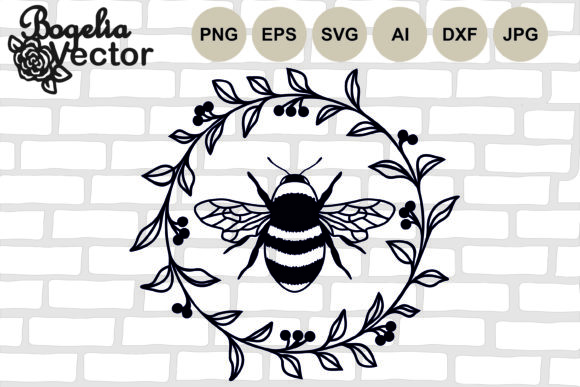
Bee with Wreath Frame
Let’s be real: not every floral-bee combo translates well to stitch. I tested Bee with Wreath Frame on a linen-cotton tea towel, a midweight organic cotton tote, and a baby-soft bamboo blend onesie—three very different embroidery projects, all meant for actual sale or gifting. What stood out wasn’t just charm—it was intentionality in layout and rhythm. At 7.47" x 7.88", this isn’t a dainty pocket accent; it’s a confident centerpiece. The circle leaves frame wraps the bee with gentle asymmetry—no rigid symmetry here—and the honeycomb texture beneath the bee’s body adds subtle dimension without overloading the stitch count. It feels like a design made *for* embroidery, not just adapted to it.
A Natural Fit for Thoughtful Handmade Products
This isn’t a shout-from-the-crowd motif. Bee with Wreath Frame leans into warmth, quiet craftsmanship, and nature-rooted elegance—ideal for boutique branding, nursery decor, or small-batch kitchen goods. I stitched it onto a cream-colored canvas apron for a local beekeeper’s pop-up shop, and customers paused longer than usual. Why? Because the wreath reads as hand-drawn, not digitally stiff—the leaves taper naturally, the bee’s wings have soft edge gradation, and the honeycomb isn’t a flat fill but a layered suggestion of depth. That nuance builds trust: buyers see care, not clip art.
It shines strongest on medium-to-heavy fabrics where stitch definition holds: structured totes, twill caps, linen pillow covers, and unbleached cotton tea towels. On those surfaces, the satin-stitched bee body and delicate running-stitch veins in the wings stay crisp. For Etsy sellers listing embroidered patches or custom sweatshirt designs, this is a reliable anchor—it scales well (I resized it down to 4.5" for a child’s cap without losing legibility) and pairs effortlessly with minimalist fonts or neutral thread palettes.
Where Caution Meets Craftsmanship
That said, Bee with Wreath Frame asks for thoughtful execution—not limitations. Its 7.88" width means it won’t fit comfortably in a standard 4x4 hoop without re-hooping or using a larger frame. If you’re stitching on curved surfaces like baseball caps or tapered baby bonnets, plan your placement carefully: the lower arc of the wreath may distort if hooped too tightly or stitched without proper stabilizer support.
Thin or highly textured fabrics need extra attention. On a lightweight rayon-blend scarf, the outer leaf tips blurred slightly—even with tear-away + cut-away combo stabilizer—so I’d recommend skipping that use case unless you’re willing to digitize minor cleanup. Similarly, dense fill areas (like the central honeycomb section) can cause puckering on stretchy knits unless you reduce stitch density manually or use a light mesh stabilizer underneath. Dark fabrics? Test contrast first: light gold or mustard thread pops beautifully against charcoal, but pale yellow disappears on navy unless you add an underlay stitch or switch to white bobbin thread.
Design Integrity in Real Commercial Use
As a craft business owner, I judge embroidery files by how they hold up *after* washing, wear, and customer scrutiny. Bee with Wreath Frame avoids over-detailing—a common trap in floral SVGs—so no tiny detached petals or micro-stems that vanish after two washes. The bee’s antennae are clean lines, not fragile filaments. The laurel frame uses consistent stroke weight, meaning satin stitches lock securely without excessive jump stitches. That directly supports product longevity and reduces post-stitch trimming time.
For personalized gifts—think baby blankets, wedding kitchen towels, or anniversary aprons—this design communicates sincerity without cliché. It’s friendly but not childish, botanical but not botanical-obsessive. Customers don’t see “SVG file”; they see heirloom energy. That perception lifts perceived value, justifies premium pricing, and encourages repeat orders. One Etsy seller told me her Bee with Wreath Frame-embroidered linen napkin set outsold her top floral design by 30% last spring—because buyers associated it with quality, not quantity.
Practical Designer Notes Before You Stitch
- Always test on scrap fabric first—especially with new stabilizer combos or thread brands. The wreath’s outer leaves behave differently on terry cloth versus duck canvas.
- Check thread color contrast in natural light *and* on-camera. A warm beige thread looks rich on oatmeal linen but muddy on heather gray.
- Review stitch density in your embroidery software. If the honeycomb area feels overly dense for your fabric, reduce fill density by 10–15% before finalizing.
- Confirm hoop size compatibility. At nearly 8 inches wide, this design needs at least a 5x7 hoop—or smart re-hooping strategy for smaller frames.
- Inspect small details at 200% zoom: wing veins, leaf serrations, and bee leg articulation should remain distinct, not merged.
- Test black-and-white mockups to assess silhouette strength—this design holds up well, but verify before committing to a full batch.
- Compare light vs. dark backgrounds using printable mockups. The wreath’s open negative space works beautifully on both, but thread sheen changes dramatically.
- Use appropriate stabilizer: medium-weight cut-away for knits, tear-away + light iron-on for wovens, and adhesive-backed for slippery silks.
- Verify licensing terms before selling finished items or bundling Bee with Wreath Frame into digital embroidery bundles—commercial use rights aren’t automatic, even for Crafts-category Graphics.
In short: Bee with Wreath Frame earns its place in your working library—not as filler, but as a go-to for projects where authenticity matters. It’s balanced, scalable, and quietly distinctive. Whether you’re embroidering a holiday gift for a teacher, launching a small shop line of botanical kitchen textiles, or building a cohesive brand identity for your craft business, this design delivers visual calm with professional polish. Just remember: great embroidery starts with respect for the fabric, the machine, and the person who’ll hold the finished product in their hands.