Cowboy Boots Decorated with Flowers
First Impressions: Whimsy with Wearable Warmth
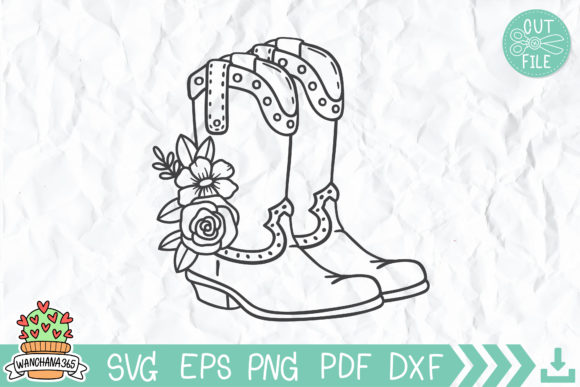
When I opened Cowboy Boots Decorated with Flowers, I didn’t see just another floral boot graphic—I saw a mood. It’s cheerful but grounded, playful without being childish, and distinctly American Southwest meets garden-party charm. The boots sit upright, balanced, with clean outer silhouettes and generous negative space around the floral clusters—critical for embroidery breathing room. The flowers aren’t hyper-realistic; they’re stylized enough to translate well in satin and fill stitch, yet detailed enough to feel intentional—not generic clipart. This isn’t a design that shouts; it hums. And that makes it ideal for handmade products where subtlety builds trust.
A Real Project Test: Embroidering a Linen Kitchen Towel for a Boutique Gift Line
Last week, I prepped Cowboy Boots Decorated with Flowers for a small-batch linen tea towel order—part of a “Ranch & Rose” holiday collection for a local gift shop. Linen is unforgiving: loose weave, minimal stretch, and zero forgiveness for dense stitching or poorly stabilized fills. So before hooping, I asked myself: Does this design respect fabric behavior? The answer was yes—but conditionally. The boot outlines are crisp, the flower centers are open enough to avoid thread buildup, and the overall width fits comfortably within a 4x4 hoop without cramming. That gave me confidence to proceed with medium-weight tear-away stabilizer and 40-weight rayon thread.
Where It Shines (and Where It Needs Guardrails)
- Custom apparel: Works beautifully on sweatshirts and canvas tote bags—especially when placed off-center on the chest or lower back. The shape reads clearly even at 3.5" wide.
- Baby embroidery: Softens nicely on cotton onesies or burp cloths, but skip the tiniest buds if stitching for newborn sizes—those details risk disappearing under gentle washing.
- Embroidered patch: Excellent candidate for an iron-on or sew-on patch. Clean edges hold up well during cutting and finishing.
- Holiday & wedding gifts: Paired with neutral thread (cream, charcoal, sage), it reads as thoughtful—not kitschy—on aprons, pillow covers, or denim jackets.
- Etsy seller advantage: Stands out in search results for “cowboy boot embroidery” or “floral western design,” especially when paired with strong printable mockups showing it on real fabric textures.
Fabric & Function Reality Checks
This isn’t a one-size-fits-all embroidery file. On thin or stretchy fabrics like jersey or lightweight knits, I’d reduce stitch density manually—or switch to a lighter fill pattern—before stitching. Dark fabric demands high-contrast thread (think navy boots + pale yellow daisies), while light backgrounds let you lean into tonal layering. Curved surfaces like caps? Possible—but only if you use a smaller version (under 3") and a cap hoop with proper foam backing. And never skip testing on scrap: what looks balanced on screen can read lopsided once stitched, especially with asymmetrical flower placement.
Design Integrity Meets Customer Expectations
As a designer who ships embroidered goods directly to customers, I know perception is part of the product. Cowboy Boots Decorated with Flowers lands as handmade—not mass-produced—because it avoids over-rendered detail. There’s no tiny lettering, no micro-stems, no gradients that require specialty threads. That means fewer customer questions about “why does this look different than the picture?” and more repeat orders from people who recognize consistent quality. For Etsy sellers and small shop owners, that consistency builds brand recognition faster than any logo ever could.
Practical Notes Every Embroidery Designer Should Run Through
- Test the design on your target fabric *first*—linen, cotton twill, and denim all behave differently under needle and thread.
- Check thread color contrast in both natural and artificial light. What reads softly in daylight may vanish under kitchen lighting.
- Review stitch density: If your machine hesitates or the design feels stiff post-stitch, trim fill areas slightly or adjust underlay settings.
- Confirm hoop size compatibility—don’t assume it fits your standard 4x4 if you’re stitching for baby items or narrow cuffs.
- Inspect small details at 200% zoom: Are petal edges clean? Do stems taper naturally? If not, minor digitizing tweaks may be needed.
- Test black-and-white mockups—this reveals balance issues invisible in color previews.
- Compare performance on light vs. dark fabric backgrounds. Some floral elements gain or lose emphasis depending on contrast.
- Use appropriate stabilizer: Tear-away for stable wovens, cut-away for knits, and fusible for lightweight linens.
- Verify licensing terms before selling finished items or bundling the file into digital embroidery packs—especially important for craft business owners and digital product sellers.
Final Thought: A Design That Earns Its Place
Cowboy Boots Decorated with Flowers doesn’t try to do everything—and that’s its strength. It’s not a complex applique design demanding multiple hooping steps. It’s not overloaded with decorative flourishes that fray after three washes. It’s a focused, flexible, quietly confident machine embroidery design that supports the product instead of competing with it. Whether you’re embroidering a personalized gift for a friend’s baby shower or building a cohesive line of western-themed craft business merchandise, this design adds warmth, identity, and quiet professionalism—without asking for extra work. Just make sure you treat it like a real embroidery file, not just a pretty SVG: test, stabilize, refine, and trust your eye over the preview thumbnail. That’s how good design becomes great finished product.