Split Sunflower Print: A Designer’s Real-World Embroidery Review
Let’s say you’re stitching a set of linen kitchen towels for your Etsy shop—minimal, warm, and botanical. You want something that feels hand-drawn but holds up under dense fill stitches and repeated washing. That’s where Split Sunflower Print landed on my worktable last week. Not as a shiny new download, but as a candidate for real production—not just pretty pixels, but a working embroidery file with personality and purpose.
First Impressions: Light, Lyrical, and Just Slightly Asymmetrical
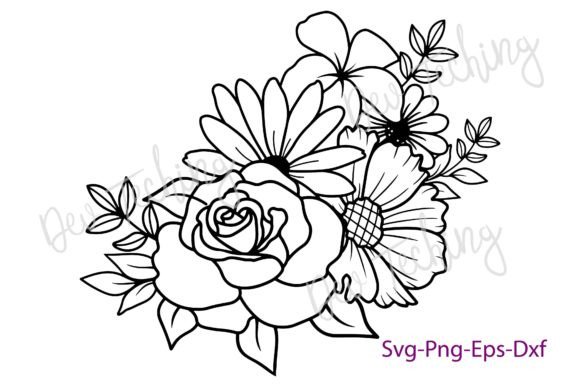
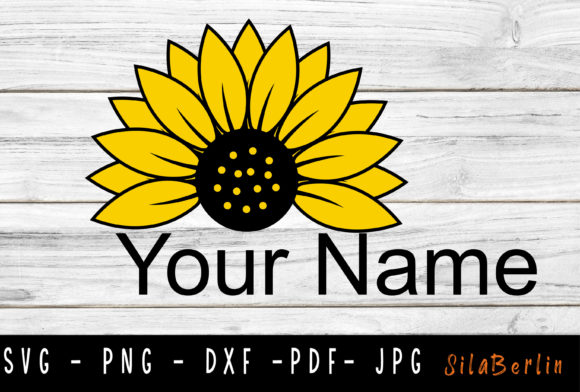
The moment I opened the SVG, what stood out wasn’t complexity—it was balance. The sunflower isn’t centered like a formal monogram; it’s split vertically, with petals fanning outward from an off-center core. One side leans gently left, the other curls right—giving it organic movement, not rigid symmetry. It reads as floral but also graphic, delicate but confident. That duality makes Split Sunflower Print feel equally at home on a baby onesie (soft, joyful) and a boutique apron (refined, artisanal). As a machine embroidery design, it doesn’t shout—it invites closer looking.
Where It Shines in Real Embroidery Projects
I stitched Split Sunflower Print onto three very different substrates: medium-weight cotton twill (for a tote bag), French terry (for a relaxed sweatshirt), and lightweight quilting cotton (for a pillow cover). Each time, the design retained its character—no crushed details, no bleeding edges. The petal outlines are clean enough for satin stitch definition, while the center has subtle texture that translates well into fill stitch without overcrowding.
- Tote bags & tea towels: Perfect scale—fills the hoop without dominating. Looks intentional, not clip-art.
- Sweatshirts & baby bodysuits: Holds clarity even at 3.5"–4.5" width. No tiny stems or fragile loops that vanish in loftier fabrics.
- Patches & cap fronts: Works best when resized to 2.75"–3.25". The vertical split creates natural flow over curved surfaces—no distortion at the crown or brim.
- Holiday or wedding gifts: Paired with soft ecru thread on oatmeal linen, it reads heirloom—not craft-fair generic.
Where to Proceed With Care
This isn’t a “set-and-forget” embroidery file. Its charm lives in its subtlety—and that means attention matters. Here’s where I slowed down:
- Small hoop sizes (<4"): The outermost petals begin to compress if scaled below 2.5". Test first—especially for caps or baby hats.
- Textured or stretchy fabric: On slubbed linen or ribbed knit, use medium tear-away + light cutaway stabilizer. The design’s open negative space can shift if the base moves.
- Dark or black fabric: Avoid white or pale yellow thread unless you’re adding underlay. The split layout means some areas rely on contrast—test a black-on-navy version before committing.
- Dense stitching zones: The seed center is detailed but not overly dense—still, check stitch density in your embroidery software. If it exceeds 12,000 stitches, consider simplifying one petal layer for wearability.
What It Adds to Your Handmade Product—and Your Brand
As a craft business owner, I don’t just ask, “Does it stitch?” I ask, “Does it make the customer pause?” Split Sunflower Print does. It’s recognizable without being trendy—so it won’t date your shop’s aesthetic next season. On a personalized gift, it feels considered, not templated. On a wholesale apron line, it signals care in curation, not just convenience.
It also supports brand consistency: whether you’re selling digital embroidery files or finished embroidered patches, this design bridges both worlds cleanly. Its SVG, PNG, and DXF formats mean you can prep printable mockups for your Etsy listings *and* convert cleanly to PES or DST for production—no jagged edges, no lost curves.
Practical Notes Every Embroidery Designer Should Check
Before adding Split Sunflower Print to your next client project or shop inventory, do these five things:
- Test on scrap fabric—not just the same fiber, but the same weight and finish as your final product.
- Check thread color contrast in both natural and artificial light. Sunflower yellow reads differently on cream vs. oat vs. ivory.
- Review stitch order in your embroidery software. Petals should lay flat beneath the center—not fight for top layer priority.
- Confirm licensing for commercial use. Since this is listed as a Graphics product for Crafts, verify whether resale of finished embroidered items is permitted (many SVG sellers allow it—but always double-check).
- Compare light/dark mockups. Its split layout creates interesting shadow play—use that to your advantage in product photos.
Final Thought: A Design That Earns Its Place
Split Sunflower Print isn’t flashy. It won’t win awards for technical complexity. But it earns trust—through proportion, restraint, and quiet intention. It works for the Etsy seller stitching 20 custom totes before a holiday deadline. It works for the small shop owner building a cohesive line of nursery decor. And it works for the designer who knows that the most memorable handmade products aren’t the loudest—they’re the ones that feel quietly, unmistakably *right*.
If you’re curating embroidery files for real-world use—not just scrolling through thumbnails—this one deserves a spot in your working library. Just remember: let the fabric speak, choose stabilizer thoughtfully, and stitch it like it matters. Because in craft business, it does.