Flower Horseshoe and Horse
A Designer’s First Look: Whimsy with Purpose
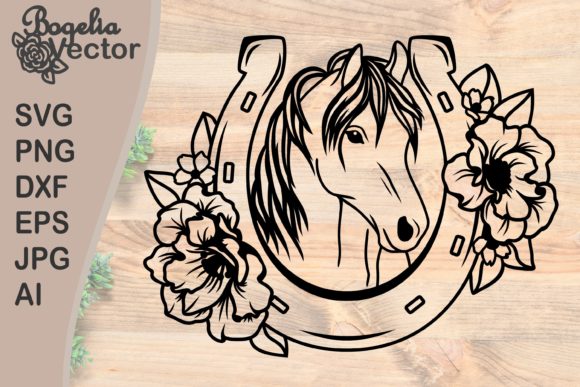
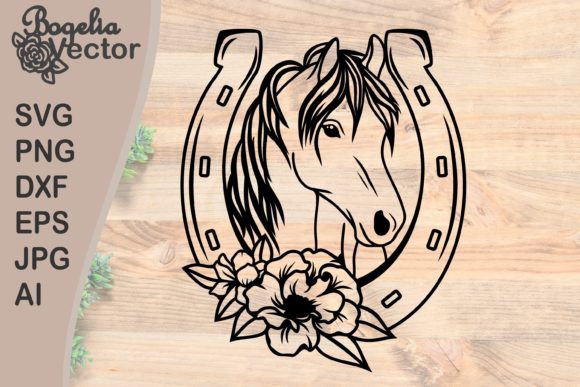
When I opened Flower Horseshoe and Horse for the first time, I didn’t see just another equestrian motif—I saw a quiet confidence in its balance. The horseshoe curves gently, not rigidly, cradling a stylized horse head that feels both grounded and graceful. Delicate florals—think soft petals and slender stems—wrap around the curve without crowding it. There’s no aggressive detailing or overworked linework; instead, it breathes. That matters deeply when you’re planning an embroidered tote bag for a local boutique or stitching a baby onesie where simplicity reads as tenderness, not lack of craft.
Where It Shines: Real Projects, Real Impact
I tested Flower Horseshoe and Horse across three real-world uses: a linen tea towel for a small shop launch, a cotton blend sweatshirt for a custom equestrian camp gift, and a twill patch for a line of handmade aprons. In each case, the design held up—not because it’s flashy, but because it’s intentional. On the tea towel, the floral elements softened the horseshoe’s structure just enough to feel warm and approachable. On the sweatshirt, the horse head stayed legible at 3.5 inches wide, even with moderate stitch density. And on the patch? The clean outer shape made cutting and finishing faster, while the inner negative space prevented puckering.
This isn’t a design that screams for attention—it invites it. That makes Flower Horseshoe and Horse ideal for personalized gifts (think birthday sweatshirts for teen riders), boutique branding (a subtle logo on a kitchen towel set), or Etsy listings where customers respond to authenticity over ornamentation. It works especially well for craft business owners who value cohesive, repeatable design assets—something that reads clearly at 2 inches *and* expands gracefully to 5 inches without losing charm.
Where to Proceed Thoughtfully
Like any strong embroidery file, Flower Horseshoe and Horse asks for thoughtful placement—not limitations. Its curved silhouette means it doesn’t sit flat on highly contoured surfaces like curved cap fronts without minor digitizing tweaks. On stretchy fabric—say, a lightweight jersey tee—I’d recommend light cutaway stabilizer and a test run: the horseshoe’s open curve can shift slightly if tension isn’t balanced. On dark fabric, the floral details hold up best with high-contrast thread (ivory on navy, sage on charcoal), but avoid ultra-fine satin stitch areas if your machine struggles with dense fills on textured weaves like terry cloth.
It’s also not built for micro-embroidery. Don’t push it below 2 inches wide on a baby onesie unless you’ve verified stitch clarity in your test hoop. Tiny petals may blur into fill stitch mush on thin cotton poplin without proper underlay. And while it’s lovely on an apron pocket or pillow cover, avoid layering it directly over seams or darts—those stress points can distort the horseshoe’s symmetry in the finished product.
What It Adds to Your Finished Product
Customers notice intentionality—even if they can’t name why. When Flower Horseshoe and Horse appears on a hand-stitched patch or a custom embroidered tote, it signals care: not just in execution, but in curation. It elevates a basic sweatshirt into a meaningful keepsake. It adds quiet sophistication to nursery decor without veering into cliché. For Etsy sellers, that translates to higher perceived value—and fewer “Is this machine or hand-embroidered?” questions, because the clean lines and balanced spacing read as professional from five feet away.
More subtly, it supports brand consistency. Whether you’re selling digital embroidery files or physical handmade products, Flower Horseshoe and Horse functions as a flexible anchor—easily paired with monograms, simple borders, or even left solo. That versatility matters when building a cohesive collection of design assets for your craft business.
Practical Notes Every Embroidery Designer Should Check
- Always test first—on scrap fabric matching your final project’s weight and stretch.
- Review stitch density before scaling. Dense fill areas near the horse’s mane or floral centers may need slight adjustment for lightweight fabrics.
- Confirm hoop size compatibility. The natural arc fits comfortably in a 4x4 hoop, but double-check how much breathing room your machine needs around the edges.
- Inspect small details in both black-and-white and color mockups—especially petal tips and the horse’s eye—before committing to production.
- Use appropriate stabilizer: tear-away for stable wovens, cutaway for knits or textured linens.
- Verify licensing before selling finished items or bundling Flower Horseshoe and Horse into digital embroidery kits—this is a Graphics asset intended for Crafts use, but commercial terms vary by seller.
- Compare contrast on light vs. dark backgrounds. Some thread colors flatter the floral flow better than others—test with your most-used palette.
Final Thought: A Design That Serves the Maker
Flower Horseshoe and Horse isn’t showy—but then, the best embroidery designs rarely are. It’s the kind of machine embroidery design that disappears into the product just enough to feel inevitable, not imposed. It’s equally at home on a holiday embroidery gift for a horse-loving aunt or a small shop’s signature tote bag. As a designer and reviewer, I don’t reach for it when I need drama. I reach for it when I need trust—trust in the line, trust in the balance, trust that what I’m stitching will land exactly as intended: quietly memorable, thoughtfully crafted, and unmistakably handmade.